Customers expect businesses to provide secure, consistent digital experiences across websites, apps, and other channels. Behind those experiences is a basic requirement: knowing who the customer is, managing their preferences, and controlling how their data is used.
This is where SAP Customer Data Cloud (SAP CDC) comes in.
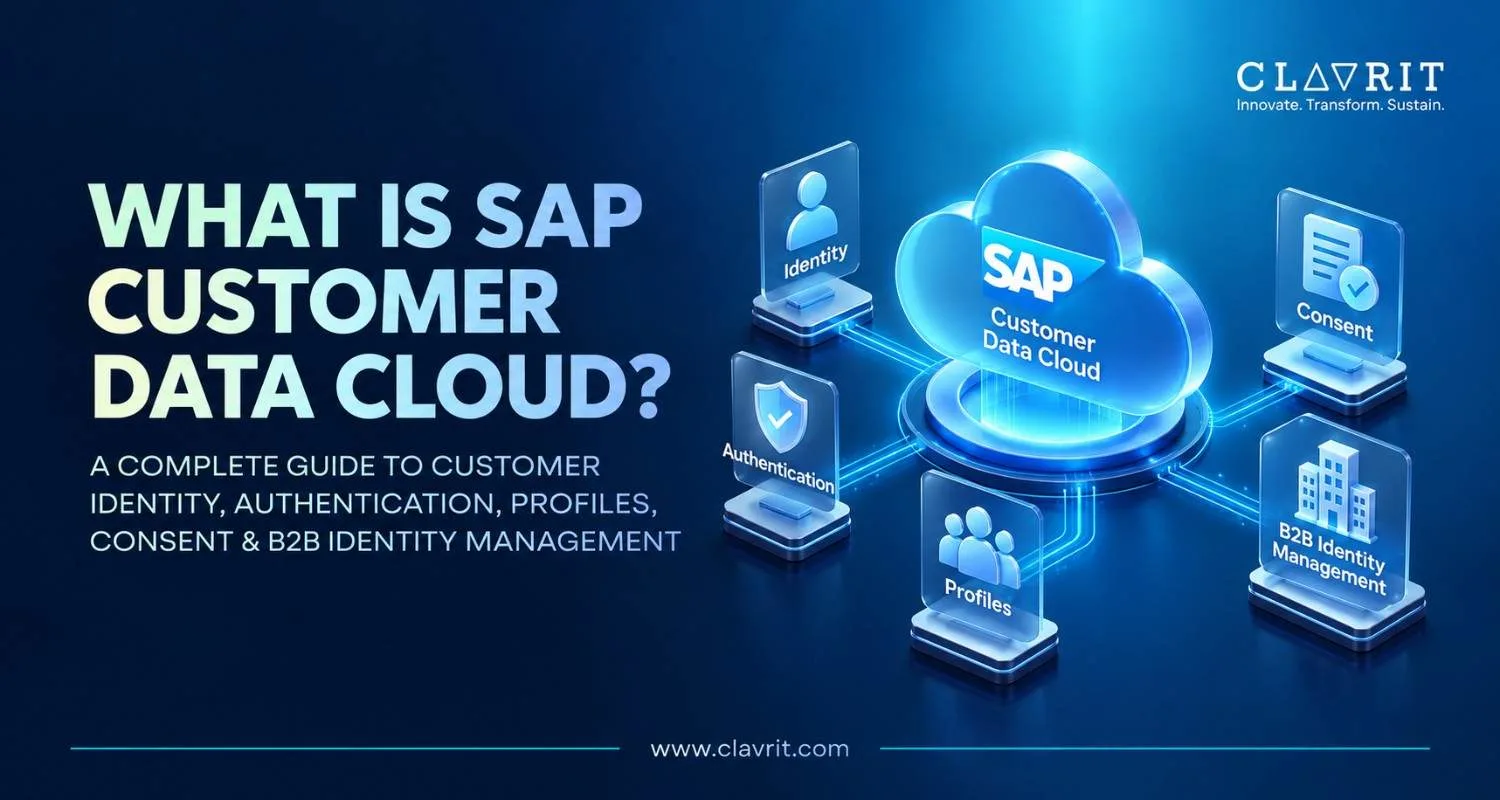
SAP Customer Data Cloud is a customer identity and access management platform that helps businesses manage customer identity, authentication, profiles, consent, and B2B relationships. SAP identifies Customer Identity, Customer Consent, and CIAM for B2B as core components of Customer Data Cloud.
For enterprises, this can be especially useful when customer identity needs to work across multiple brands, markets, applications, or customer journeys. A centralized approach can reduce duplication and give teams a clearer way to manage identity-related processes as digital operations grow.
What Is SAP Customer Data Cloud?
SAP Customer Data Cloud is designed to help businesses connect with website and app users, securely manage customer information, and support trusted digital experiences.
Its main capabilities include:
Customer identity and authentication
Customer profile management
Privacy and consent management
Customer preferences
B2B identity and access management
Integration with other business systems
Customer Identity helps organizations manage user registration and authentication, while Customer Consent manages privacy preferences and consent. CIAM for B2B adds identity, authentication, and authorization capabilities for business relationships.
Why Is SAP CDC Important?
Customer information is often spread across websites, applications, commerce platforms, marketing systems, and other tools. When identity information is fragmented, businesses can face inconsistent customer records, disconnected login experiences, and more complex consent management.
SAP CDC helps organizations create a more structured approach.
It can help businesses:
Provide consistent registration and login experiences
Manage customer profiles centrally
Maintain customer consent and preferences
Support personalized digital experiences
Manage B2B users and organizations
Connect identity data with other systems
What Are the Key Components of SAP CDC?
1. Customer Identity
Customer Identity provides customer identity and access management capabilities. Businesses can use it for registration, authentication, profile management, and related digital identity journeys.
SAP supports different authentication and registration options, including social login and other configurable flows.
2. Customer Consent
Customer Consent focuses on privacy, preferences, and consent.
Businesses can use it to manage consent statements and communication preferences and maintain records of customer consent. SAP provides functionality for managing different consent statements and customer choices.
3. CIAM for B2B
B2B identity management can be more complex because one customer organization may contain multiple users with different roles and permissions.
SAP's CIAM for B2B capabilities combine authentication and identity management with authorization policies. This can help businesses manage organizations, members, roles, and access requirements more systematically.
How Does SAP CDC Work?
At a high level, SAP CDC creates an identity layer between digital customer experiences and the systems that need customer information.
A typical journey may look like:
Registration → Authentication → Profile Management → Consent → Customer Interaction
For example, a customer registers on a company's website. SAP CDC can manage the identity and authentication process, store relevant profile information, and manage applicable consent preferences.
SAP also provides integration capabilities and APIs that allow customer identity information to work with other applications.
SAP CDC and SAP Commerce Cloud
SAP CDC can be integrated with SAP Commerce Cloud to support customer identity journeys within commerce experiences.
SAP's documentation describes integration capabilities for registration and login and the creation and synchronization of customer profiles. For B2B scenarios, the integration can also support organization registration, customer registration, and organization management.
What Are the Benefits of SAP Customer Data Cloud?
Better identity management
Businesses can centralize customer identity and authentication instead of managing separate processes across different digital channels.
Consistent customer experiences
Customers can have a more consistent registration, login, and profile-management journey.
Structured consent management
Businesses can manage privacy preferences and consent records in a dedicated environment.
Support for personalization
Reliable customer profile information can provide a stronger foundation for personalized experiences.
B2B identity management
Organizations can manage business users, roles, and authorization requirements more systematically.
What Should Businesses Consider Before Implementing SAP CDC?
A successful SAP CDC implementation starts with business requirements rather than configuration alone.
Businesses should consider:
Customer journeys: Identify where registration, authentication, and profile management are required.
Data requirements: Understand what customer information is collected, where it currently resides, and which systems need access to it.
Consent requirements: Define the privacy statements, preferences, and consent flows that need to be managed.
Integrations: Identify the commerce, marketing, CRM, and other systems that need to exchange identity information.
Security and permissions: Define who should have access to customer data and administrative capabilities.
Testing and migration: Plan data migration, testing, and rollout before moving the solution into production.
How Clavrit Can Help With SAP CDC
SAP CDC implementation involves more than configuring a platform. Businesses need to understand their existing customer journeys, identity architecture, integrations, and consent requirements before deciding how SAP CDC should fit into the wider SAP environment.
Clavrit's SAP CDC Services are part of its broader SAP solution portfolio, alongside SAP CX, SAP Commerce, and SAP Managed Services.
A practical engagement can include:
Reviewing existing identity and customer-data workflows
Planning SAP CDC implementation
Supporting integration requirements
Configuring relevant SAP CDC capabilities
Addressing consent-management requirements
Supporting the wider SAP CX environment
Conclusion
SAP Customer Data Cloud provides a structured approach to customer identity, authentication, profiles, consent, and B2B identity management.
Its role goes beyond login management. By creating a more centralized identity and consent layer, SAP CDC can help organizations deliver consistent digital experiences while giving customers greater control over their information and preferences.
For businesses already using SAP Customer Experience solutions, SAP CDC can become an important part of a broader customer-data and identity strategy.
The key is to treat implementation as both a business and technology initiative—not simply a configuration project.
FAQ's
1. What is SAP Customer Data Cloud?
SAP Customer Data Cloud is a customer identity and access management solution for managing customer identity, authentication, profiles, consent, and B2B identity requirements.
2. What is SAP CDC used for?
SAP CDC is used for customer registration, authentication, profile management, consent and preference management, and B2B identity and access management.
3. Is SAP CDC the same as SAP Customer Data Platform?
No. SAP CDC focuses primarily on identity, authentication, consent, and CIAM capabilities. Customer Data Platform addresses broader customer data management and related use cases.
4. Can SAP CDC integrate with SAP Commerce Cloud?
Yes. SAP provides integration capabilities between SAP Customer Data Cloud and SAP Commerce Cloud for customer registration, login, profiles, and B2B organization management.
5. Does SAP CDC support consent management?
Yes. Customer Consent supports the management of privacy preferences, consent statements, and related customer choices.
6. Why work with an SAP CDC implementation partner?
An implementation partner can help assess identity architecture, customer journeys, data requirements, integrations, security, and consent processes, then align the implementation with business objectives.