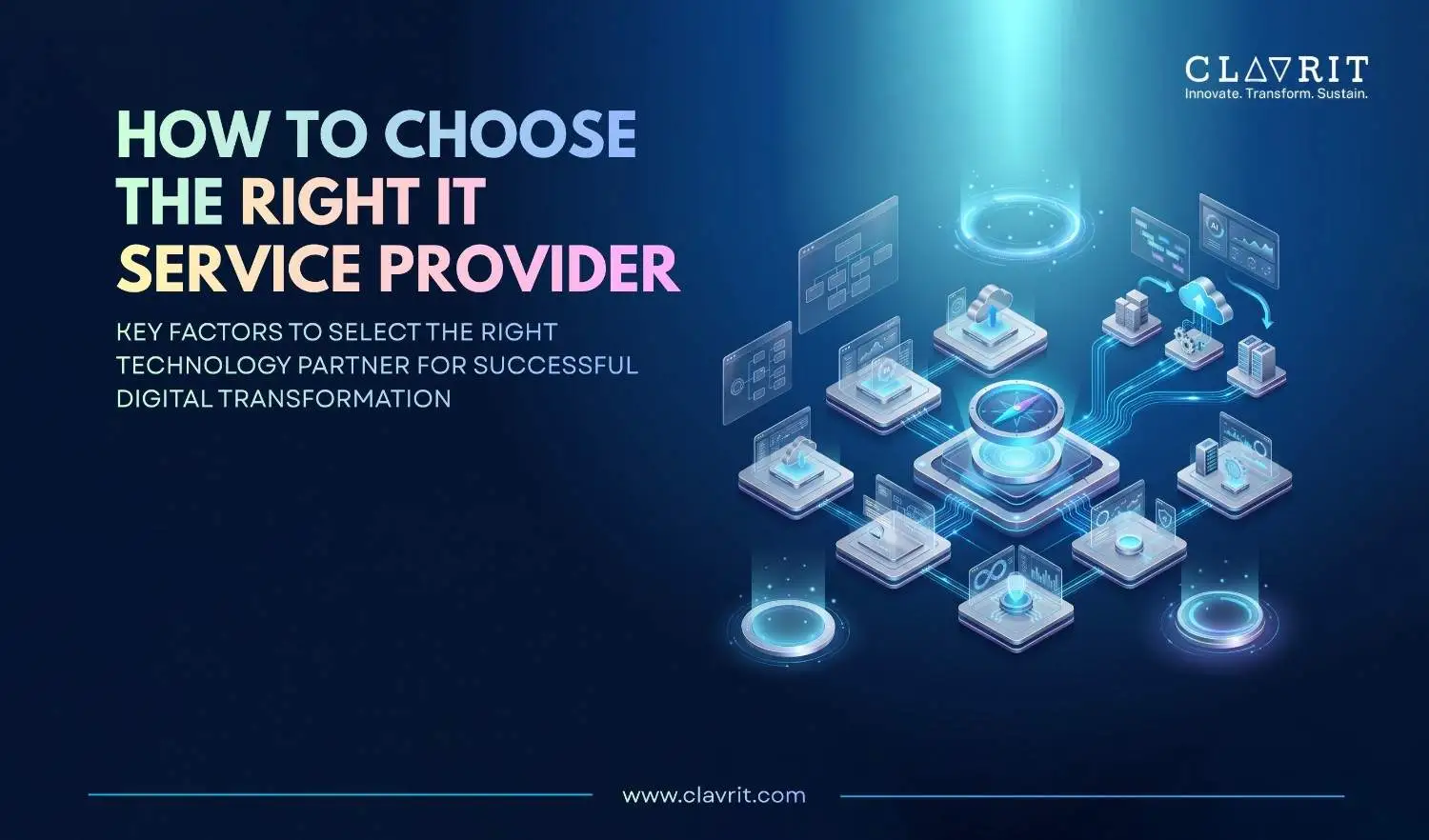
How to choose an IT service provider for digital transformation is one of the most consequential decisions an enterprise makes. Global spending on digital transformation is projected to reach $3.4 trillion in 2026, according to IDC's Worldwide Digital Transformation Spending Guide. Yet fewer than 35% of transformation initiatives deliver the lasting business impact they were funded to create.
The difference between the 35% that succeed and the majority that do not is rarely technology. It is the quality of the partner executing the transformation.
Why This Decision Is Strategic - Not Just Operational
Partnering with the right IT service provider typically delivers 25 to 40% reduction in operational costs and 30 to 50% productivity gains, according to verified 2026 industry data. Those outcomes do not come from software selection, they come from execution quality and strategic alignment.
The primary reason transformation efforts fail is the decision to partner with a vendor based on reputation or price instead of the capacity to deliver on the project. Eye-catching presentations and familiar brand logos may comfort the ability of the partner to comprehend the company's scenario and serve it is what matters in the end.
Key Criteria for Choosing an IT Service Provider
Proven Industry and Technical Expertise
The right IT service provider must demonstrate a track record within your specific industry, not just general technology capability. Digital transformation in the sectors of financial services, healthcare, industry and retail comprises different regulatory needs, complexity of integration and challenges of change management.
Evaluate the service providers based on their referenceable outcomes from organizations similar in size and in the same line of business as yours. Client references and documented case studies have proven results in the form of tangible outputs like efficiency improvements, cost savings and length of implementation time.
Strategic Alignment Over Technology Execution
A credible IT service provider begins every engagement with strategy - auditing current systems, mapping process gaps, and connecting proposed changes to specific business objectives before implementation begins. The Outsource Accelerator report of 2026 suggests that any successful engagement starts with the right strategy and ends with proper adoption of the system rather than mere implementation. Companies that focus on the tool, not on the end result, are mere providers of various services as opposed to true partners in the process of transformation. This aspect really matters when implementation gets complicated.
Comprehensive Capability Across the Transformation Lifecycle
Digital transformation is not a one-time project, it is an ongoing process. The right IT service provider must demonstrate capability across the full lifecycle: strategy, implementation, change management, and continuous post-deployment optimization.
A provider with strong implementation capability but limited post-deployment support creates dependency risk at the point where ongoing optimization determines whether the initial investment compounds or stagnates.
AI and Cloud Competency as Baseline Requirements
In 2026, AI and cloud capability are no longer differentiators among serious IT service providers, they are baseline requirements. Providers should be evaluated by how specific and deep their experience in AI and cloud implementation is, rather than just looking at general claims.
Providers that describe AI transformation in concrete terms governance framework, data readiness, workflow renaming, and quantifiable outcome monitoring are different from others that provide updated technology solutions, while calling them generative AI implementations.
Change Management Maturity
The implementation of technology only brings value when organizations accept it. One of the key factors that determine the success of a transition is the ability to manage changes and this is one of the criteria that is most often ignored when selecting a vendor.
Inquiries should clarify how the vendors conduct role-based training and track its effectiveness after the launch. Reliable vendors are able to answer these critical questions with details instead of vague phrases.
Transparent Total Cost of Ownership
It is important to assess the total cost of ownership, not just the project price. Check the relevant certifications such as SOC 2 or ISO 27001 and make sure the pricing structure considers integration complexity, change management, and post-deployment support cost. Vendors that provide estimates that are artificially low and introduce changes during the implementation process have been proven to lead to money overruns.
Questions to Ask Before Selecting an IT Service Provider
Prior to making any selections, ask the candidates:
Are you able to supply references from similar organizations and industries with successful transformation stories?
What is your method from going from strategy to execution, and how do you define success at every step of the way?
How do you evaluate the acceptance of your solution after its launch?
What do you do to manage your project scope changes, and not make it a budgeting nightmare?
Those providers who reply concretely are really set apart from those who only give positioning remarks.
How Clavrit Delivers IT Services for Digital Transformation
Clavrit brings together profound technical competence in SAP, Salesforce, and artificial intelligence with the alignment of business strategy, which is vital in determining whether investment in technology generates meaningful results:
Transformation strategy and assessment - link investments in technology to specific goals at the business level before implementation starts
SAP and Salesforce implementation - deliver solutions to clients from beginning to end, covering enterprise resource planning, customer relationship management, and cloud platforms
AI integration and enablement - introduce AI at key stages of the work of the company
Organizational transformation and uptake of innovations - have structured and well-organized programs and processes through which technology is implemented
Optimization after launch of the project - address the issues of improvement of the system
Conclusion
The selection process for an IT service provider ultimately boils down to one question: does this vendor have a firm understanding of what your company does, how to align technology investment with quantifiable results, and the ability to follow through on that understanding?
The execution fit, industry knowledge, and maturity of change management are decisive factors with respect to the success of your transformation versus the vast majority that fail.
Ready to evaluate an IT service provider built around measurable outcomes? See Why Enterprises Choose Clavrit
FAQs
Q1. How do you choose the right IT service provider for digital transformation?
Evaluate providers against five criteria: proven industry expertise, strategic alignment, comprehensive lifecycle capability, AI and cloud competency, and change management maturity. Client references documenting measurable outcomes from comparable organizations are more reliable than certifications or methodology documentation alone.
Q2. What is the most common reason IT service provider partnerships fail?
Most failures trace to selecting a provider based on brand recognition or headline price rather than execution fit. Providers that lead with tools rather than business outcomes and underinvest in change management are the most consistent sources of transformation underdelivery.
Q3. What should enterprises evaluate beyond technical capability?
Change management maturity, post go-live support, and transparent total cost of ownership are consistently underweighted during evaluation and consistently decisive in determining outcomes. A provider strong in implementation but weak in adoption support creates risk at the point where optimization determines long-term business value.